Passionate perfection for everyone
“It has been a privilege to have spent so much of my life immersed in Puccini’s music. He has been part of my life since childhood. My mother taught theatre history in Rome, and one of her specialities was opera librettos.
La Bohème was one of the very first operas I conducted. Since then, I’ve conducted it countless times – at more than 150 performances across six or seven different productions. That’s how it goes: once you’ve managed to conduct a work without disastrous results, you’re invited to do it again. People sometimes assume you can handle similar music, which is actually completely wrong. Someone who has conducted La Bohème might be offered Verdi’s La Traviata – also a wonderful opera, but one that demands an entirely different approach.
Puccini’s genius appears in many things. One of the most important is his ability to portray mood and emotion. His music is constantly changing, veering this way and that, even though there’s always a steady current running underneath. Verdi, on the other hand, has a plan. His music is emotional too, but organised.
Puccini is a master of his craft, which I adore. I think you have to say that La Bohème is perfect. Everything is in balance; there isn’t a note too many or too few. It’s not like Wagner’s Tristan und Isolde, for example, which inspired Puccini. The delightful thing about Wagner’s opera is that there’s far too much of absolutely everything. Puccini on the other hand is sheer, marvellous perfection – although, as I’ve grown older, I’ve begun to feel that he can sometimes be a little too neat and tidy.
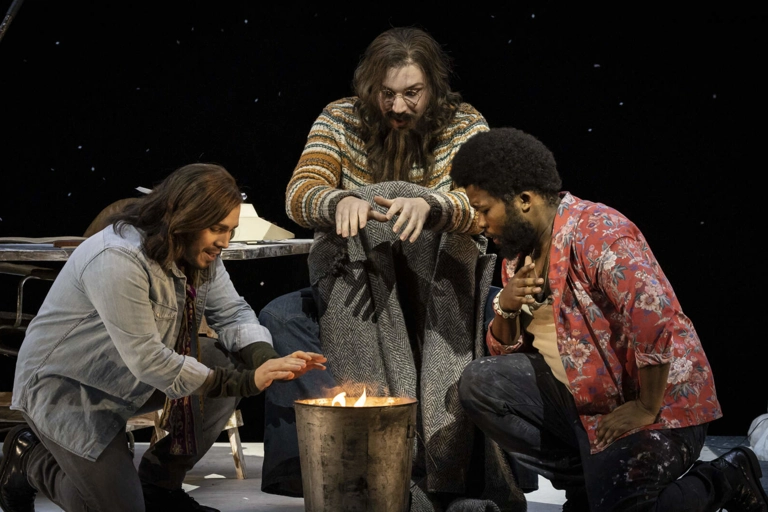
In Italy, we call opera “opera lirica”, with emphasis on its lyrical aspect. Although I’m a musician, I see opera primarily as text – it’s poetry set to music – and La Bohème has a fantastic libretto. It’s concentrated and short. As Rodolfo says in Act I, when he uses pages torn from his manuscript to keep the fire burning: “Brevity is a great virtue.” (“La brevità, gran pregio.”) I think Puccini would have agreed.
The libretto’s narrative arc is clear, communicating a strong sense of where the story is heading, to turning points that leave the audience breathless. Its structure isn’t so different to those used in modern television series.
Puccini’s sensitivity to the psychology of his characters is what keeps La Bohème fresh. He’s phenomenal at creating subtext and offering emotional hints without ever telling the audience what to think. And he has an extraordinary gift for melody, which is essential in Italian opera. In the nineteenth century, opera was a commercial enterprise, so if you wanted to pay the rent, you had to write tunes that people would remember.
La Bohème is also funny – in fact, I see it as a comedy. Apart from the brief duet between Rodolfo and Marcello in Act III and the tragic ending, the whole opera has a sense of lightness.
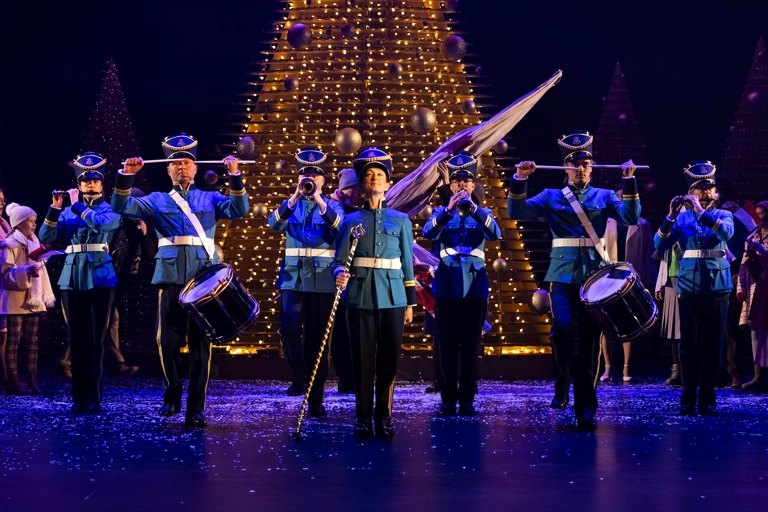
The reason it is still performed so frequently is that it can be enjoyed on many different levels. If you’re ten years old and visiting the opera for the first time, you’ll love Act II, with all its hustle and bustle and the military band. As a teenager, it’s impossible not to be swept away by the passion of the story and the music.
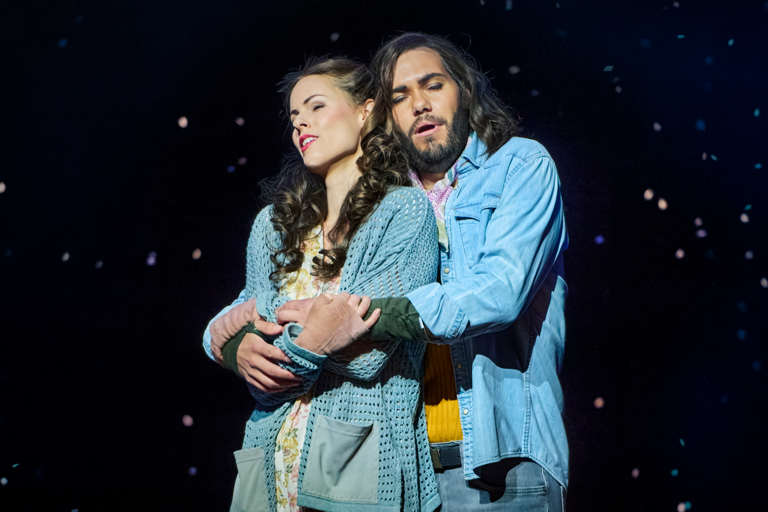
The seasoned operagoer can delve deeper: what is really happening in the opera? One fascinating detail to listen out for is Puccini’s clever way of telling us that Rodolfo and Mimì are soulmates. When Rodolfo sings his famous aria on a single repeated note, it echoes the way Mimì spoke to him earlier. The musical phrase returns throughout the opera, and I think Puccini tells us, within the very first few minutes, that these two belong together – they speak the same language.
For a conductor, La Bohème presents a challenge on at least two levels. The first is technical: quite simply, the movement of your hands. The music is constantly changing, and you have to be quick, both mentally and physically. It’s like driving in the fast lane of a motorway. But La Bohème is not music that lends itself to anarchy. Everything unfolds at a furious pace, but if you get lost in the details, you lose the big picture.
The second level is interpretation. Here, you can take one of two approaches: either you follow Puccini’s precise instructions – which is hard work, because there are so many of them – or you take a freer approach and concentrate on the bigger picture. I used to be more interested in the broad strokes. But the older I get, the more I’m drawn to working with the singers and musicians to bring out the small nuances that Puccini has so beautifully written into his score.”
— As told to Pernilla Karlsson, programme editor