“Rossini’s La Cenerentola has no magical mice, transformed pumpkins or delicate slippers. Instead, it offers a wealth of verbal playfulness, vocal acrobatics, rapid-fire exchanges, cascades of alliteration and an abundance of puns. Rossini and his librettist Jacopo Ferretti define their characters through the way they speak – language reflects their personalities but also serves as a comic device. The characters often make their lines unnecessarily complicated, using foreign or borrowed words, particularly Latin, in their eagerness to appear more refined than they really are.
During rehearsals, we’ve worked on rhythmic precision in the delivery of the text, ensuring that the rapid passages are not just fast, but also clear and full of life. Here are a few examples of the opera’s linguistic and musical games.
First, there’s the quick-witted Dandini, who attempts to flirt with the sisters halfway through Act I: il guercetto Amore è stato il tornitore (the little blind Cupid has been at work on the lathe).
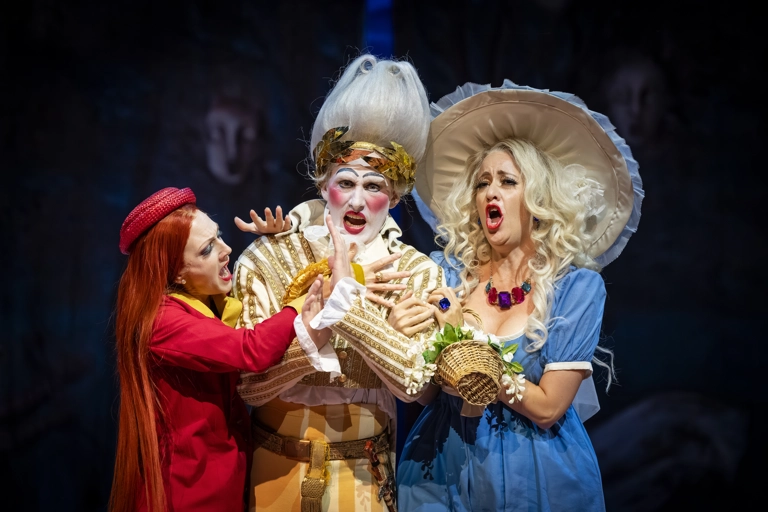
What Dandini is telling the sisters, then, is that they have clearly been shaped by Cupid, the blind god of love, turning them on his lathe. Don Magnifico is impressed by Dandini’s extravagant language and exclaims: Che eloquenza norcina! (What Norcian eloquence!)
There’s plenty to explore here if you’re curious. The word norcina literally means something from Norcia, an Italian town famous for its cured meats. Don Magnifico wants to praise the ‘prince’s’ eloquence but, as usual, gets his words in a twist.
There’s another theory, too: that the expression refers to an eloquent monk who lived in Norcia in the sixth century. So what does the phrase really mean? Sausage-inspired eloquence or a monk with a gift for words? Take your pick.
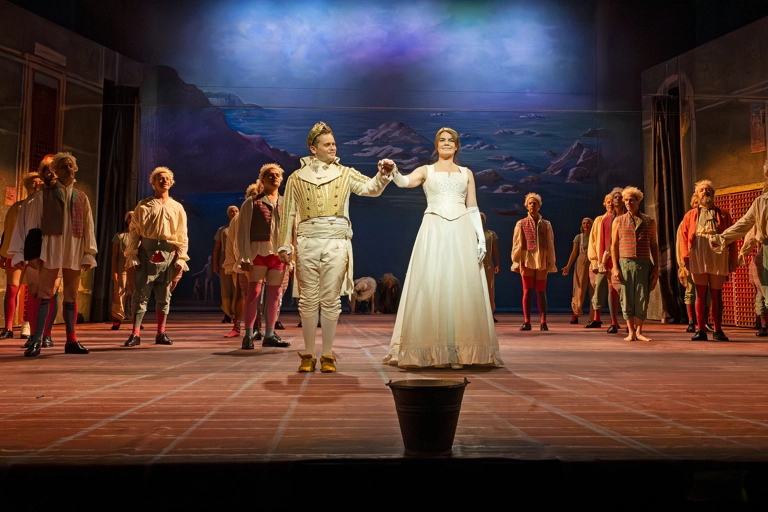
When Cinderella and Prince Ramiro meet for the first time, they sing scende all’alma e fa sperar (it enters the soul and awakens hope). It’s clear that they find a connection through their coloratura. There’s an instant spark! And you can see it in the score, too. The illustration shows how their musical lines move together.
In the recitative that opens Act II, we encounter Don Magnifico, who exclaims with theatrical indignation: Corpo del mosto cotto! (By the body of boiled grape cordial!) The phrase is a distortion of Corpo di Cristo morto (the dead body of Christ), but Don Magnifico invokes the body of boiled grape cordial instead. His language reflects his desperation: he wants to impress, but keeps tripping over his words.
In the sextet towards the end of Act II, the soloists tackle a real tongue-twister: questo è un gruppo rintrecciato (what a tangled group this is).
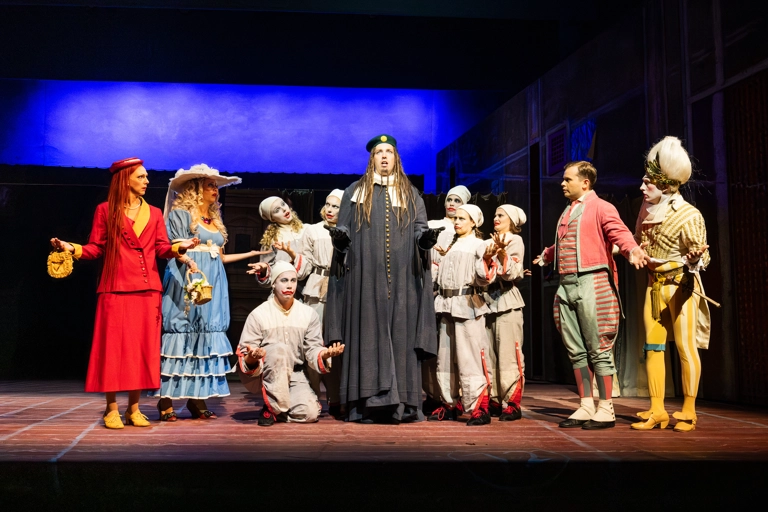
Here, Ferretti makes the language tie itself in knots, both musically and phonetically. The extended rolling r sounds make the phrase seem to spiral in on itself, heightening the sense that everything is spinning out of control.
Finally, a few words about Cinderella’s song. The one she sings over and over again … as she scrubs, lays the table and serves: Una volta c’era un re / che a star solo s’annoiò (Once upon a time there was a king / who grew tired of living alone).
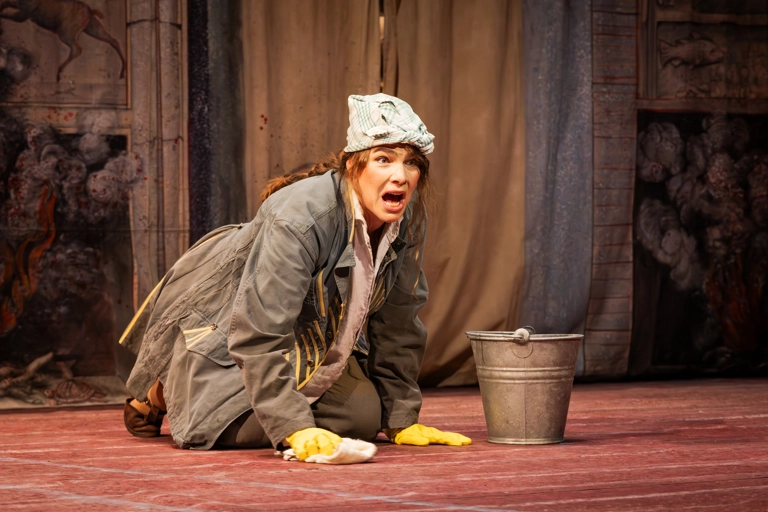
The song is simple, almost like a lullaby, with a gentle, lilting rhythm. While the other characters raise their voices, tie themselves in linguistic knots or try to impress, Cinderella holds on to her song. Everyone else wants to sound grander than they really are, but Cinderella alone is genuine.”
— As told to Lisa Iverstam, programme editor